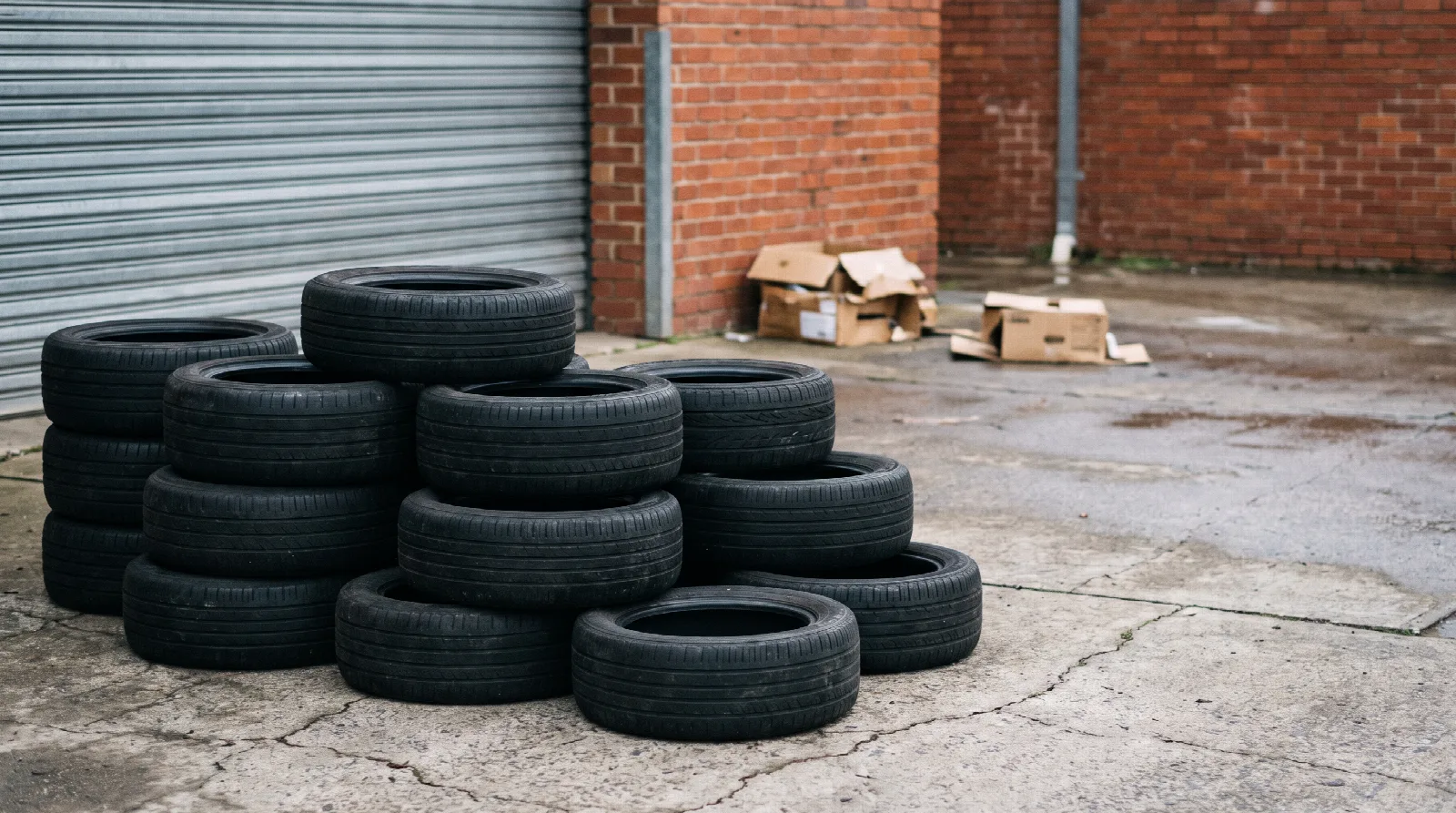
Most old car tyres in Australia are collected, but only about a quarter of the country's end-of-life tyres are actually reused or recycled. The rest are exported to be burned for energy, or end up in landfill, stockpiles or illegal dumps, and a federal inquiry has just recommended that the system be looked at again.
When you replace a set of tyres, the old ones don't simply vanish. Here is where they tend to go, what is being proposed, and the few simple questions that help make sure yours end up in the right place.
How many tyres are we talking about?
Australia generates about 537,000 tonnes of end-of-life tyres each year. That total covers everything from small hatchback tyres to truck tyres and huge mining tyres, so it is much bigger than the family car alone.
Recent industry analysis breaks that total down like this:
| Where they go | Approximate share |
|---|---|
| Reused | 9% |
| Recycled in Australia | 17% |
| Exported for energy recovery | 40% |
| Landfilled, buried at mines, stockpiled or illegally dumped | The remainder |
Australia banned the export of whole and baled waste tyres from December 2021, so the material that goes overseas now has to be processed first. Exporting it for fuel is still a far cry from turning it into something new.
What recycled tyres become
A worn tyre is still a useful bundle of rubber, steel and textile. Once processed, the material can be used in:
- crumb rubber for road surfacing
- adhesives, including those used for tiling
- soft-fall playground surfaces and sports surfaces
- tyre-derived fuel, which recovers energy but not the material
Local recyclers have argued for years that Australia could do much more of this at home. What holds them back is a mix of low-cost competition from operators who don't follow the rules, and limited demand for the recycled product.
The problem with rogue collectors
Tyres cost money to dispose of properly, and that creates an opening for people who take the fee and skip the recycling. Industry groups describe collectors who undercut licensed businesses, then dump tyres in bushland, under bridges or on vacant land.
The scale is hard to pin down, which says something in itself. In Victoria, around a quarter of end-of-life tyres are estimated to be unaccounted for, potentially dumped or stockpiled. When councils clean up those dumps, ratepayers carry the bill, and tyres that have been lying in mud or chemicals are often too contaminated to be recycled at all.
What the federal inquiry recommended
In October 2026, a federal parliamentary committee handed down its report on the tyre industry with 12 recommendations. On used tyres, it called for a nationally consistent approach and an independent audit of the existing stewardship scheme, along with consideration of a mandatory national scheme.
Today's scheme is voluntary. Tyre importers and vehicle makers choose whether to pay its levy, and analysis released this year found that companies responsible for 47 per cent of replacement tyre imports do not contribute. Supporters of a mandatory scheme point to New Zealand, which already has one, and argue that making everyone pay removes the advantage for those who opt out.
These are recommendations and not law. The federal government still has to respond, and questions remain about what a mandatory scheme would mean for smaller retailers and repairers. For now, nothing changes about how you buy or replace a tyre.
How to make sure your old tyres are handled properly
You don't need to become a recycling expert. A few minutes of attention at changeover is enough.
Ask who collects them
When you book your new tyres, ask the local workshop or mobile fitter near you what happens to the old set. A business that uses a licensed collector will be able to tell you without hesitation. If you are not sure where to start, our find a fitter page lists fitters by location.
Be wary of door-knockers and online offers
Someone offering to take your old tyres away for cash, whether at your door or through a social media post, may have no intention of recycling them. If those tyres are dumped, you have paid to create the problem.
Check the disposal line on your quote
Many tyre businesses charge a small disposal fee per tyre. It is reasonable to ask what it covers. A quote that looks unusually cheap because disposal has been left out isn't really cheaper.
Don't stockpile at home
A few old tyres in the shed can collect water and become a fire risk. Check your council's rules if you need to dispose of them yourself, as many waste centres accept tyres but charge a fee.
The greenest tyre is the one that lasts
The simplest way to send fewer tyres to the waste stream is to get the full life out of each set. That comes down to everyday care:
- Keep pressures at the level shown on your tyre placard, and check them when the tyres are cold.
- Rotate tyres at the interval in your owner's manual so they wear evenly.
- Have your wheel alignment checked if you notice uneven wear or the car pulling to one side.
- Replace on condition, not guesswork. Our guide to checking tread depth shows how.
Electric cars put extra demands on tyres, so owners should watch wear closely. We covered why in our article on EV tyre wear.
Choosing tyres that suit how you drive
A tyre that suits your car and your driving is likely to wear more evenly and serve you better than one chosen on looks. If you drive a small or medium car in 205/55R16, everyday touring options include the Ecowing ES33 from Kumho and the EuroTraxx H/P from Landspider. For an SUV on 225/65R17, the Argos H/T from Roadking is a highway-focused choice. Always match your tyre placard for size, load and speed, and see our tyre guide if you want help reading the numbers.
Common questions
Are old car tyres recycled in Australia?
Some are, but it is a minority. About 17 per cent of end-of-life tyres are recycled here and about 9 per cent are reused. A larger share is exported as processed material for energy recovery.
Is tyre recycling compulsory?
Not at a national level. The current stewardship scheme is voluntary. A federal committee has recommended considering a mandatory one, but no decision has been made.
Can I put old tyres in my bin?
No. Tyres should not go in household bins. A tyre business or your local waste centre can take them, usually for a fee.
Why do I pay a fee to dispose of a tyre?
Collecting and processing tyres costs money. The fee goes towards getting them to a collector, which is why it is worth asking who that collector is.