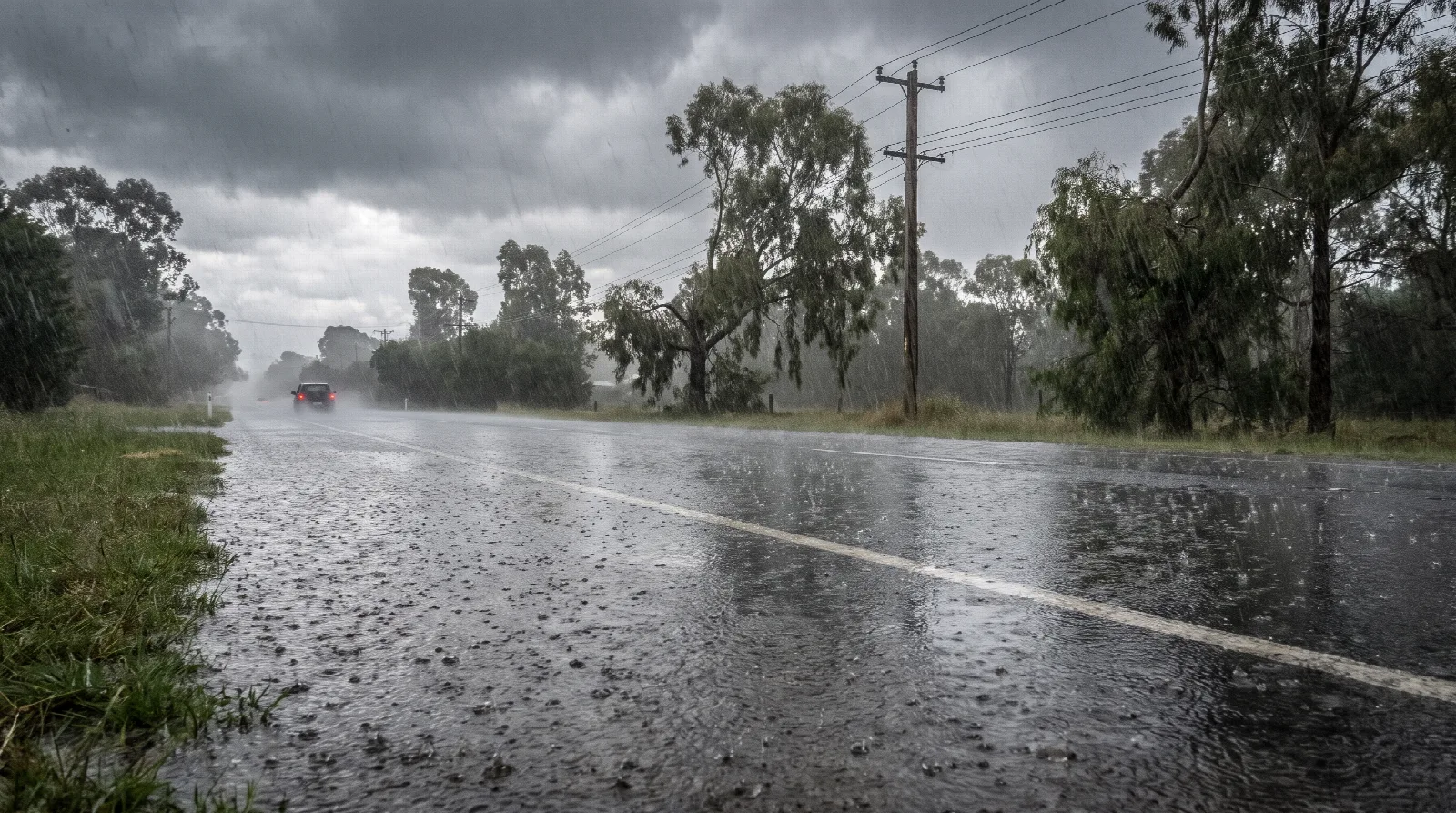
Aquaplaning happens when a tyre meets more water than its tread can push aside, so it rides up onto a film of water and loses contact with the road. Three things decide whether it happens: how fast you are going, how much water is on the road, and the condition of your tyres. Two of those are in your hands.
With summer storms on the east coast, the wet season across the north and sudden downpours just about anywhere, it is worth knowing what aquaplaning feels like, how to avoid it and what to do in the second or two it lasts.
What aquaplaning actually is
The grooves in a tyre are there to move water. As the tyre rolls, water is squeezed into the grooves and thrown out the back and sides, leaving the rubber in contact with the bitumen. A new tyre can clear up to around 30 litres of water every second at 80 km/h.
When water arrives faster than the grooves can carry it away, a wedge builds up in front of the tyre and lifts it off the surface. A tyre riding on water cannot steer, brake or drive the car. Aquaplaning and hydroplaning are two names for the same thing.
What it feels like
The usual sign is the steering suddenly going light, as if the front wheels have stopped being connected to the road. The car may feel as though it is floating, and it will not respond properly to the steering wheel or the pedals. It often lasts only a moment, until the tyres cut back through to the road, but a moment is long enough to drift out of your lane.
What causes aquaplaning
Speed
Speed is the biggest factor and the easiest to change. The faster the car is moving, the less time each part of the tread has to clear the water under it. Slow down and the same tyre on the same road can cope with far more water.
Standing water
Aquaplaning needs a layer of water to ride on. It is most likely during heavy rain or just after it, and wherever water collects: dips, uneven patches, the edges of the road and any stretch that drains poorly.
Worn tread
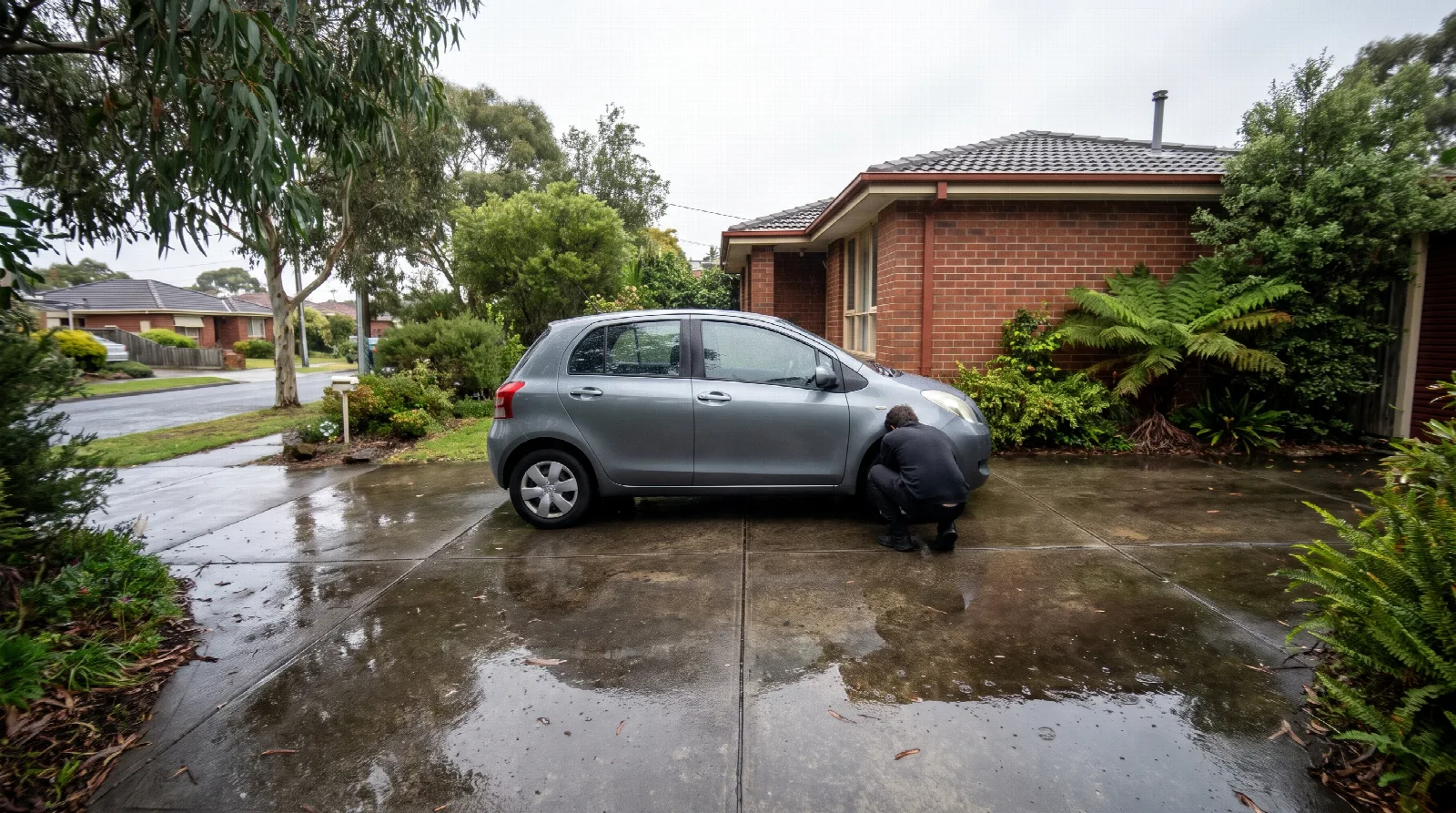
As tread wears down the grooves get shallower and hold less water. The legal minimum in Australia is 1.5 mm, but a tyre loses much of its ability to clear water well before that, and the risk of aquaplaning climbs sharply once tread drops below about 3 mm. Our guide shows how to check your tread depth at home in a couple of minutes.
Wrong tyre pressure
Both under-inflated and over-inflated tyres put less of the tread properly onto the road, which means less grip and a higher chance of aquaplaning. Check your pressures about once a month and before a long trip, with the tyres cold, against the tyre placard on your car. The placard is usually inside the driver's door opening.
How to avoid aquaplaning
- Slow down when the road is wet. Drive to the conditions, not the sign. Nothing else on this list makes as much difference.
- Leave a bigger gap. Stopping distances are longer in the wet, and extra room gives you time to react without braking hard.
- Turn cruise control off. Wet roads call for constant small adjustments to your speed, and you want your right foot in charge the instant grip changes.
- Steer around standing water when it is safe to do so, and slow down before you reach water you cannot avoid.
- Look after your tyres. Keep the tread above 3 mm and the pressures at the placard figure.
What to do if your car aquaplanes
- Ease off the accelerator smoothly. Let the car slow down by itself. In a manual, press the clutch in.
- Hold the steering wheel steady and keep it pointed where you want to go. A sharp turn of the wheel does nothing while the tyres are floating and can throw the car sideways when grip returns.
- Do not brake hard. Sudden braking can unsettle the car. Only brake firmly if a collision is otherwise unavoidable.
- Wait for the tyres to grip again. You will feel the steering come back. Carry on at a lower speed.
If it happens more than once in ordinary rain, treat it as a warning about your tyres and have them checked.
Tyres that cope better in the wet
Tread depth matters most, so the first question is how much tread you have left. When it is time to replace, the tyre label is the next thing to look at.
Many tyres carry a European tyre label, and one of its three ratings is wet grip. It grades how well the tyre brakes on a wet road, from A for the shortest stopping distance down to E. The grade measures wet braking, not aquaplaning itself, but it is the clearest like-for-like guide to wet-road performance you will find. Where a tyre has a label, we show the grade on the tyre's card.
These four are in stock in common sizes and all carry a B for wet grip, the second-highest grade:
| Tyre | Size | Load and speed | Wet grip |
|---|---|---|---|
| Rapid Eco809 | 205/55R16 | 91V | B |
| Landspider EuroTraxx H/P | 215/60R16 | 99V | B |
| Landspider SporTraxx UHP II | 225/45R17 | 94W | B |
| Grenlander Kingpro One | 225/65R17 | 102H | B |
Whatever you choose, the size, load index and speed rating need to match your car's tyre placard. The tyre guide explains how to read it, the deals page lists current offers, and a local workshop or mobile fitter near you can fit the new set.
Common questions
Is aquaplaning the same as hydroplaning?
Yes. Both words describe a tyre riding on a layer of water instead of gripping the road.
At what speed does aquaplaning happen?
There is no single speed. It depends on the depth of the water, the tread left on your tyres and their pressure. Worn tyres in deep water can aquaplane at speeds well below the limit, which is why slowing down in heavy rain matters so much.
Does tread depth really make a difference?
A big one. Shallower grooves move less water, so a worn tyre starts to float much earlier than a new one. Below about 3 mm the risk rises quickly, even though the tyre is still legal down to 1.5 mm.
Should I use cruise control in the rain?
No. Turn it off whenever the road is wet, so you can adjust your speed straight away and ease off the moment the steering feels light.