
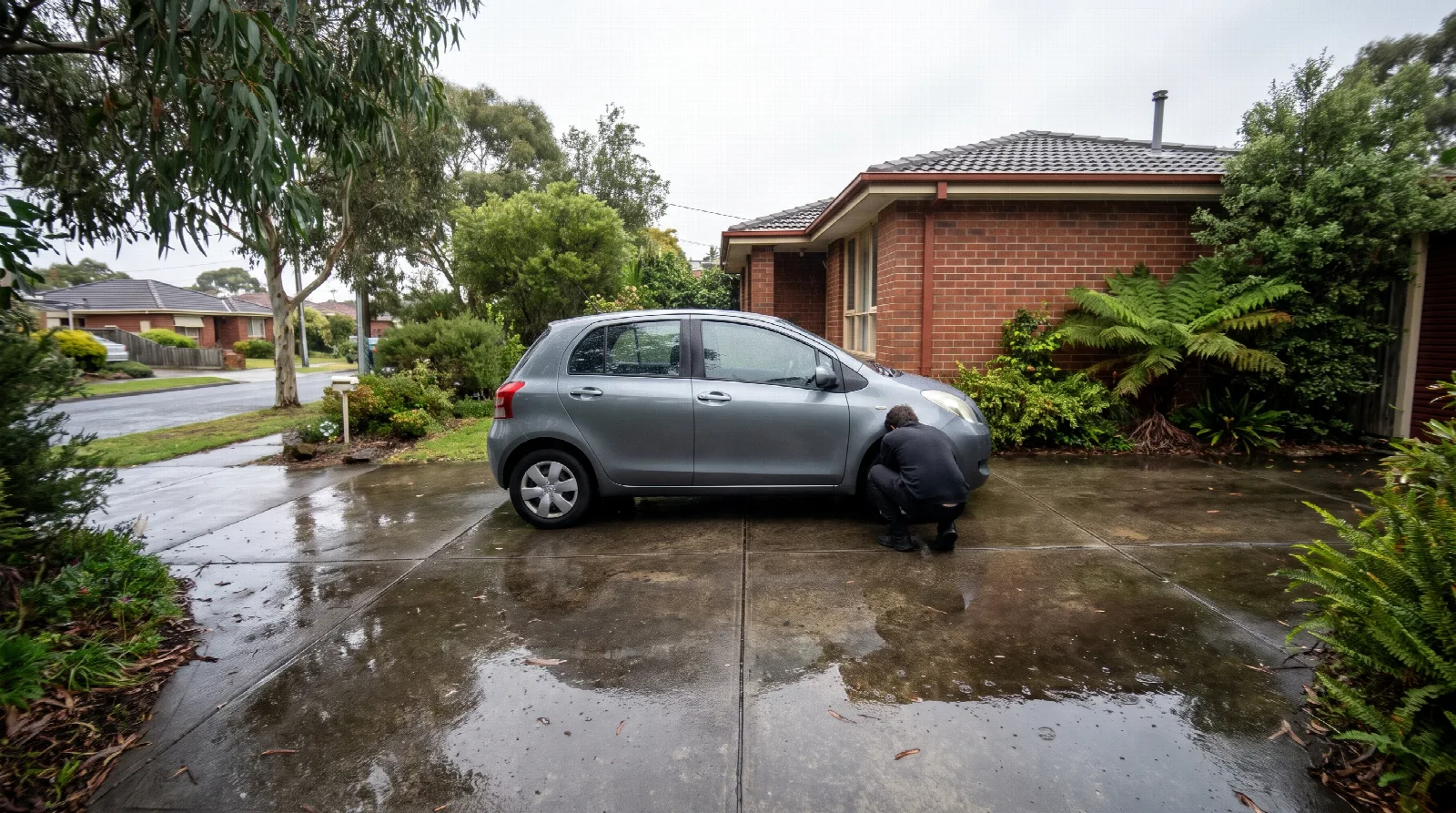
To check tyre tread depth, measure the main grooves with a tread depth gauge or look at the tread wear indicator bars: in Australia a tyre is unroadworthy once the tread in its principal grooves is worn below 1.5 mm. For safe braking in the wet, though, most experts suggest replacing car tyres well before that, at around 3 mm.
Here is how to check your tyres at home in a few minutes, what the wear pattern is telling you, and the other signs that it is time for a new set.
The legal limit and the sensible limit
The legal minimum is 1.5 mm of tread depth in the principal grooves, the wide channels that run around the tyre. The shallower secondary grooves and cuts between tread blocks do not count. Below 1.5 mm, the tyre is unroadworthy and the car can be defected.
Legal is not the same as safe. Tread grooves exist to pump water out from under the tyre so the rubber stays in contact with the road. As the grooves get shallower they shift less water, so grip in the wet falls away gradually and the risk of aquaplaning rises. That decline starts long before the legal limit, which is why replacing at about 3 mm is the common recommendation, especially if you drive in the rain often.
Three ways to check tread depth
1. Use a tread depth gauge
A cheap tread depth gauge is the most accurate tool. Push the probe into a main groove, press the base flat against the tread blocks either side and read the scale. Avoid placing it on a wear indicator bar. Measure in the inner, centre and outer grooves, and at a few points around each tyre, because tyres rarely wear evenly.
2. Find the tread wear indicators
Every car tyre has small raised rubber bars moulded into the bottom of its main grooves. Their positions are usually marked on the shoulder with a small triangle or the letters TWI. When the tread around a bar has worn down level with it, the tyre has reached the legal limit and needs replacing straight away.
3. The 20-cent coin check
For a quick check, slide a 20-cent coin into a main groove with the platypus's bill pointing down. If the tread does not reach the tip of the bill, which sits roughly 3 mm from the coin's edge, the tyre is getting close to replacement time. It is a rough guide only, so confirm with a gauge or a tyre professional.
What uneven wear is telling you
How a tyre wears is often more revealing than how much it has worn. Run your hand across the tread and compare the edges with the centre.
| Wear pattern | Likely cause | What to do |
|---|---|---|
| Centre worn more than the edges | Running above the recommended pressure | Set pressures to the placard figure |
| Both edges worn, centre fine | Running below the recommended pressure | Check pressures more often and look for slow leaks |
| One edge worn more than the other | Wheel alignment out, or worn suspension parts | Have a wheel alignment and suspension check |
| Patchy, scalloped or cupped wear | Worn shock absorbers, suspension or balance issues | Have the suspension and wheel balance inspected |
| Fronts worn faster than rears | Common, as the front tyres steer and take more stress | Ask about regular tyre rotation |
Fix the cause before you fit new tyres. Otherwise the new set will wear out the same way, and faster than it should.
Tyre age and other warning signs
Why age matters
Rubber ages even when a car is barely driven. Sun, heat and time harden the compound and can cause fine cracks in the sidewall and between tread blocks, so an old tyre with plenty of tread can still grip poorly.
You can read a tyre's age from the four-digit date code on its sidewall, usually at the end of the code that starts with DOT. The first two digits are the week and the last two are the year of manufacture, so 2423 means the 24th week of 2023. The code may only be on one side, so check both.
There is no legal age limit in Australia, but a common rule of thumb is to have tyres professionally inspected every year once they pass five years old, and to replace them at ten years old regardless of tread. Do not forget the spare, which often looks new but can be very old.
Other signs you need new tyres
- Bulges or bubbles on the sidewall, which point to internal damage, often from a pothole or kerb strike. Replace the tyre straight away.
- Cuts, gouges or exposed cords anywhere on the tyre.
- Cracking in the sidewall or tread grooves.
- Vibration through the steering wheel or seat, or the car pulling to one side.
- A tyre that keeps losing air even after a repair.
- Repeated punctures or a tyre that has been driven on while flat.
Make your tyres last longer
Most early tyre replacements come down to pressure, alignment and habit. A few minutes a month makes a real difference to tread life, braking and fuel use.
- Check pressures at least monthly, and before long trips, when the tyres are cold. Use the figure on the tyre placard, usually on the driver's door frame, not the maximum printed on the tyre.
- Adjust for load. Use the higher placard figures when the car is full of passengers and luggage.
- Get the alignment checked after hitting a kerb or a big pothole, or if the steering wheel is off-centre.
- Rotate the tyres at the intervals in your owner's manual to even out front and rear wear.
- Drive smoothly. Hard braking, fast cornering and wheelspin all wear tread faster.
Choosing your next set
When your tyres are due, look for strong wet grip first, since that is where worn tyres let you down. In 205/55R16, one of the most common sizes on small and medium cars, the Landspider EuroTraxx H/P and SporTraxx UHP, the Kumho Ecowing ES33 and the Grenlander Kingpro One are all solid everyday choices.
Compare every option with our 205/55R16 search, check the latest tyre deals, or read the tyre guide to find your size and pick a pattern. Then book a local workshop or mobile fitter near you to fit and balance them.
Common questions
What is the minimum legal tyre tread depth in Australia?
The legal minimum is 1.5 mm in the tyre's principal grooves. Once the tread is worn level with the tread wear indicator bars, the tyre is unroadworthy and must be replaced.
Should I replace my tyres at 3 mm?
It is a good rule of thumb. Wet grip drops off steadily as tread wears, so replacing at around 3 mm keeps more margin for braking and cornering on wet roads.
Does the 20-cent coin test really work?
It gives a quick, rough idea. If the tread does not reach the platypus's bill, you have about 3 mm or less left. Confirm with a tread depth gauge before you decide.
How often should I check my tyres?
Check pressures at least once a month and before long drives, and look over the tread and sidewalls at the same time. Measure tread depth every few months, more often as the tyres approach 3 mm.