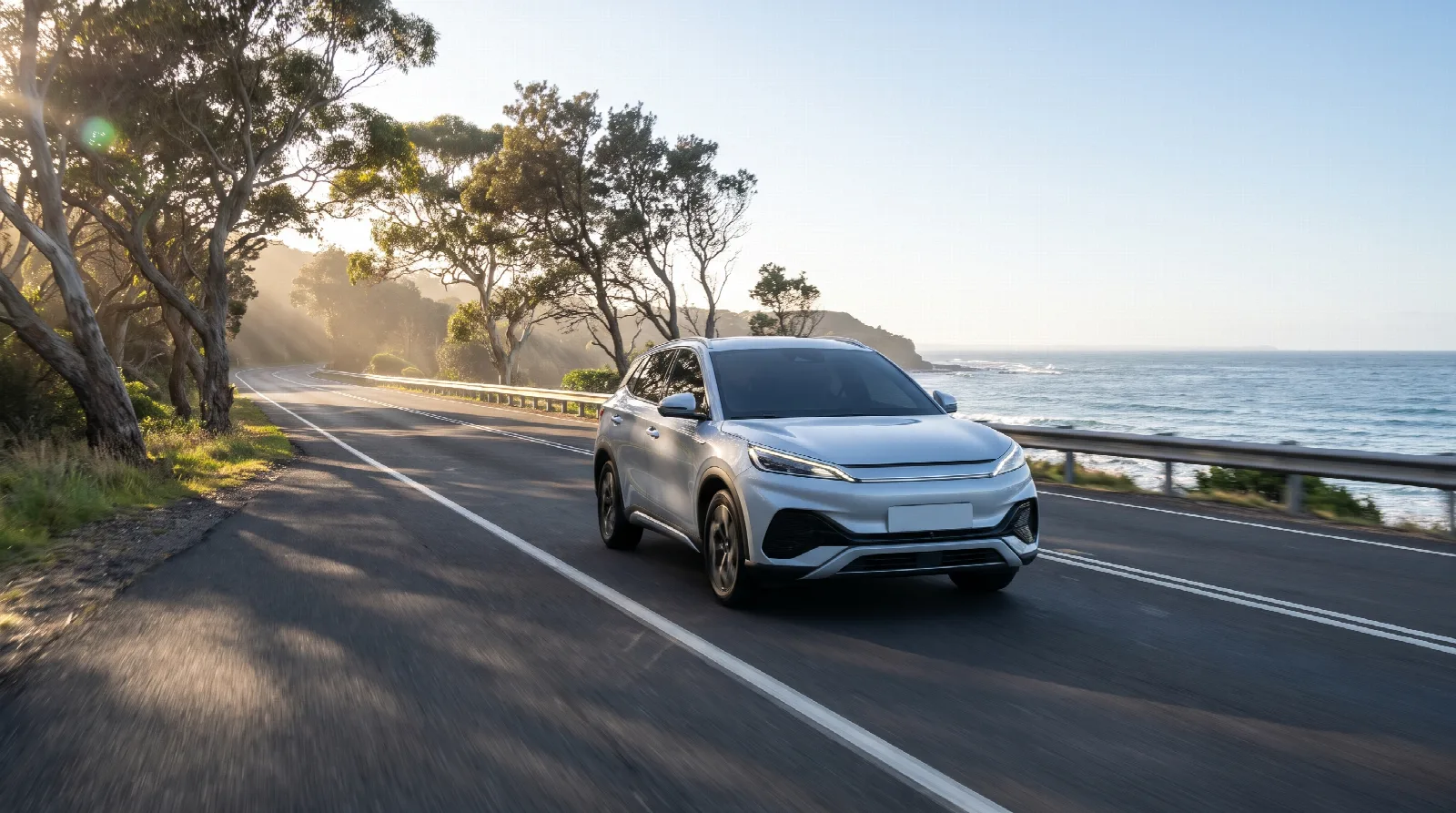
PowerTrac tyres give everyday drivers a value option across hatchbacks, sedans, SUVs and vans, and the EcoSport X78 has the widest choice of sizes of any PowerTrac road tyre on TyreVault, from 17 to 22 inches. This guide explains what each PowerTrac road pattern is made for, what the EU label grades tell you, and how to work out whether one suits your car.
PowerTrac sits in the value end of the market. That does not mean one tyre for everything: the brand splits its road range into sporty summer tyres, a larger SUV pattern and a van tyre, so it pays to match the pattern to the car and the way you drive.
The PowerTrac road range at a glance
- EcoSport X78: a passenger summer tyre in low-profile sizes for sedans, hatches, sporty cars and many EVs, from 17 to 22 inches.
- Eco Sport X77: an SUV summer tyre in very wide 21-inch sizes for large performance SUVs.
- CityRacing UHP: a passenger summer tyre that covers both low-profile sports sizes and taller SUV sizes such as 235/65R17 and 245/65R17.
- VanTour: a commercial tyre for vans and people movers, in 13 to 16-inch sizes.
The brand also makes 4WD tyres, but this guide sticks to the tyres most TyreVault drivers need for daily driving.
EcoSport X78: the low-profile everyday tyre
The X78 is the pattern most PowerTrac buyers will land on. It is made for drivers whose car came with low-profile tyres on larger wheels, which today includes plenty of small SUVs, mid-size sedans and electric cars, not just sports models.
Here is what the sidewall and the EU label say on three sizes we carry:
| Size | Load / speed | Wet grip | Rolling resistance | Noise |
|---|---|---|---|---|
| 215/45R17 | 91Y (XL) | C | D | 71 dB |
| 235/45R20 | 100W | C | C | 71 dB |
| 255/45R20 | 105Y | B | C | 72 dB |
A few things stand out. The grades change from size to size, so check the label on the exact size you need instead of assuming the whole range scores the same. The 215/45R17 is an XL (extra load) tyre, built to carry more weight at a given pressure than a standard-load tyre of the same size. Most X78 sizes carry a high speed rating (W is 270 km/h, Y is 300 km/h), which matters if your placard calls for one.
To see every tyre in the most popular small-car size, try a 215/45R17 size search.
Reading the EU label grades
Where a tyre has been graded for the European tyre label, those grades are the quickest way to compare tyres side by side. We show them on the product page wherever we have them.
- Wet grip is graded A to E. A means the shortest stopping distance on a wet road. On roads that see heavy summer storms, this is the grade most drivers should check first.
- Rolling resistance (fuel efficiency) is graded A to E. A better grade means less energy used to keep the tyre rolling, which helps fuel use or EV range.
- Noise is the outside rolling noise in decibels. Lower is quieter.
If wet braking matters most, and for a family car it should, the B-grade sizes are the pick. Our guide on aquaplaning and how to avoid it explains why wet grip and tread depth go hand in hand.
CityRacing UHP and Eco Sport X77 for SUVs
SUV drivers have two choices in the PowerTrac road range. The CityRacing UHP covers the taller sizes found on many mid-size SUVs. In 235/65R17 it is rated 108H, which means it can carry 1,000 kg per tyre at up to 210 km/h. In that size it carries a wet grip grade of C, a rolling resistance grade of D, a noise figure of 72 dB and a UTQG treadwear rating of 420.
The Eco Sport X77 is for large performance SUVs on 21-inch wheels, with very wide sizes such as 295/35R21 and 315/40R21. In 295/35R21 it is rated 107Y, with a B for wet grip, a C for rolling resistance and 73 dB of noise.
SUVs are heavy, so the load index matters as much as the size. Never fit a tyre with a lower load index or speed rating than the one shown on your tyre placard, which is usually on the driver's door pillar.
VanTour for vans and people movers
The VanTour is a commercial tyre for vans and people movers, in sizes from 155/80R13 up to 235/65R16. Commercial tyres are built to carry heavier loads, so they suit a van loaded with tools or a people mover full of family and luggage. As with any van, check that the load index matches the placard. Commercial vans often need a higher load rating than a passenger tyre in the same size can give.
Is PowerTrac right for your car?
PowerTrac makes the most sense if you want a new set of tyres in the correct size and rating without paying for a premium badge. It suits the second family car, the commuter that clocks steady kilometres, or the large-wheeled sedan or SUV where premium tyres in the factory size are expensive.
To choose, start with three numbers from your current tyres or placard: the size, the load index and the speed rating. Our guide on how to read your tyre size explains where to find each one. Then compare the wet grip grade across the options in your size. Fitting is done by a local workshop or mobile fitter near you, and you can see who is close by on find a fitter. For more help, browse the tyre guide.
Common questions
Are PowerTrac tyres any good?
They are a value brand, and the EU label grades on our product pages give you an honest picture size by size. Some EcoSport X78 sizes score B for wet grip, while others score C, so compare the exact size you need.
Can I put PowerTrac tyres on an electric car?
Yes, as long as the size, load index and speed rating match the placard. Many EVs need XL tyres because of their battery weight, so check for the XL marking. If you want the most range, compare the rolling resistance grade.
What does XL mean on a PowerTrac tyre?
XL stands for extra load. The tyre is built to carry more weight than a standard-load tyre of the same size, and it usually needs a slightly higher pressure to do so. If your car came on XL tyres, replace them with XL tyres.
Should I replace all four tyres together?
Replacing all four keeps grip and handling balanced, and it matters most on all-wheel-drive cars. If you only replace two, fit the new pair on the rear axle for better stability in the wet.