
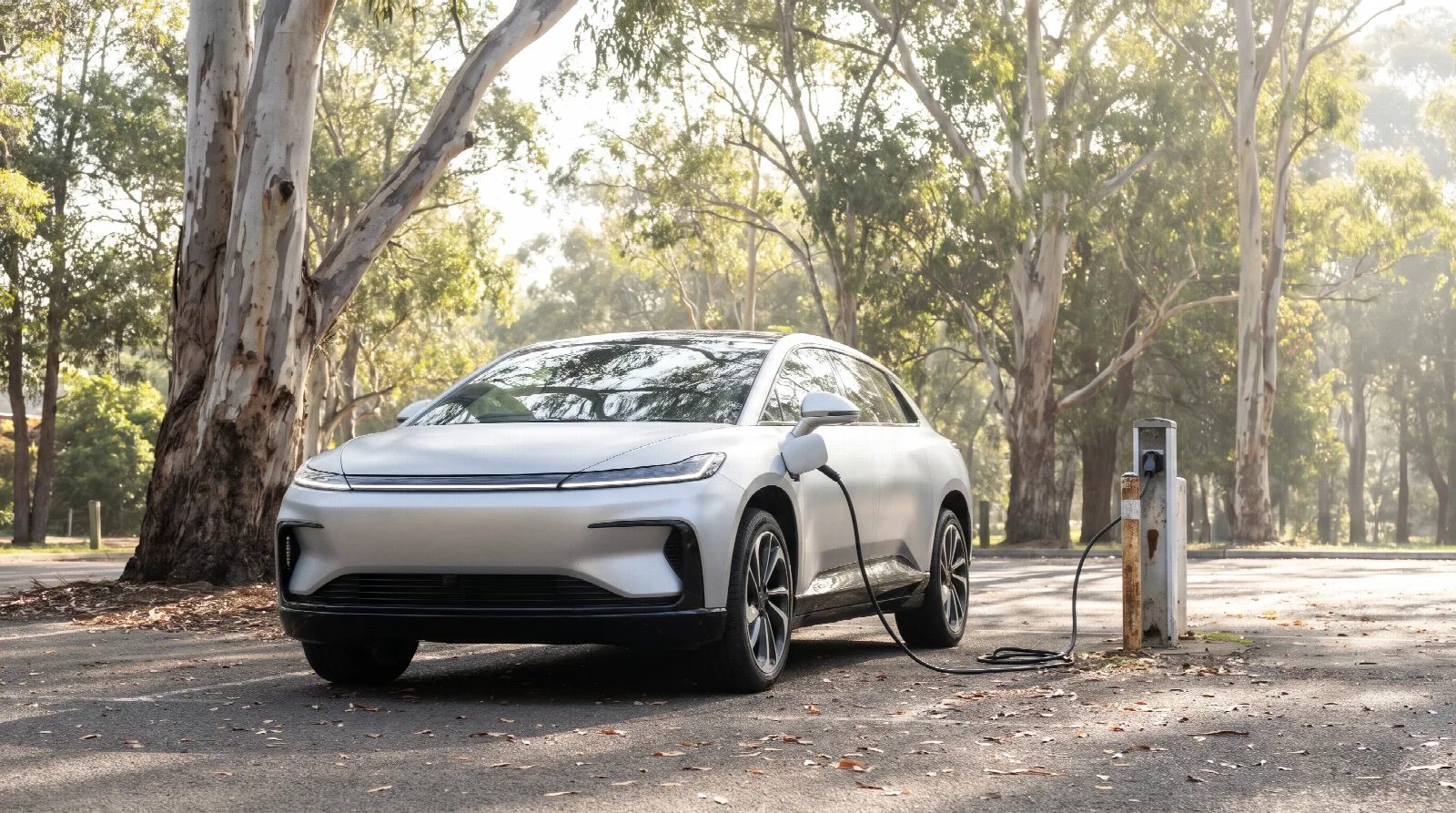
More Australians are driving electric and hybrid cars, and those cars are tougher on tyres than the petrol models they replace. With the New Vehicle Efficiency Standard now nudging carmakers to sell more low-emission models, it pays to understand why EVs wear tyres faster and what an EV-ready tyre does differently.
The good news is that a little knowledge goes a long way. Choose the right tyre, keep the pressures right and drive smoothly, and an EV's tyres can last well.
What is changing on Australian roads
The New Vehicle Efficiency Standard began in 2025. It sets average emissions targets for the new cars each brand sells, which gives carmakers a reason to bring more electric and hybrid models to Australia. For drivers, that means more choice of EVs and plug-in hybrids at the dealership, and more of them turning up at tyre time a few years later.
If you are one of those owners, or thinking about joining them, your first set of replacement tyres may arrive sooner than you expect.
Why electric cars wear tyres faster
There are three main reasons, and none of them means anything is wrong with the car.
- Weight: a battery pack adds a lot of mass. A heavier car presses harder on every tyre, and more load means more scrubbing and more heat at the contact patch.
- Instant torque: an electric motor delivers its full pull from a standstill. That quick, effortless take-off is fun, but it twists the tread harder than a gentle petrol launch.
- Regenerative braking: when the motor slows the car to recharge the battery, the tyres take that braking force every time you lift off, not only when you press the pedal.
Put together, an EV driven briskly around town can go through its tyres noticeably quicker than a similar-sized petrol car. Driven smoothly, the gap shrinks.
What makes a tyre EV-ready
Tyres designed with electric cars in mind focus on four things. Not every EV tyre does all four, so it is worth checking what you are buying.
Load capacity
Heavier cars need tyres that can carry more. Many EV fitments use XL (extra load) tyres, which carry more weight than standard-load tyres of the same size when inflated to a higher pressure. A newer marking, HL (high load), goes a step further. You will see HL printed in front of the size, while XL appears after it. HL tyres carry more than XL tyres in the same size, which helps heavy cars that have no room for a bigger tyre.
Rolling resistance
Every tyre loses some energy as it flexes. Low rolling resistance compounds and constructions waste less of it, which helps your range. On a tyre with a fuel-efficiency grade, a better grade generally points to lower rolling resistance.
Noise
Without engine noise to mask it, tyre roar is easier to hear in an EV. Some EV tyres have a foam ring bonded inside to dampen the hollow, booming noise from the air cavity, and some use tread patterns tuned to be quieter. Foam helps the cabin, not the range.
Wear resistance
Tougher compounds and stiffer structures help the tread stand up to the weight and torque, so you are not back for new tyres too soon.
Tyres worth a look for EVs and SUVs
Here are a few in-stock options in sizes common on mid-size SUVs and sedans, electric ones included. Always confirm the size and load index against your own tyre placard first.
- Grenlander X-Sporter EV in 235/55R19: an extra-load tyre carrying an EV designation, in a popular SUV size.
- Kumho Ecowing ES33 in 235/55R19: an efficiency-focused touring pattern for drivers who want range and comfort.
- Praxent Furijeter PU90 in 235/45R18: an extra-load performance tyre for heavier sedans.
- Landspider SporTraxx UHP II in 235/45R18: another extra-load option in the same size.
You can also browse by brand, such as Grenlander or Kumho, or search every tyre in a size like 235/55R19.
Getting the most from your EV's tyres
- Match the placard: Australian rules require a replacement tyre's load index to be at least the figure on your car's tyre placard. On a heavy EV, that often means an XL or HL tyre.
- Check pressures monthly: heavier cars lose tread faster when under-inflated. Use the placard pressure, checked cold.
- Rotate regularly: EVs often wear the driven axle faster. Rotating front to back evens the wear, where the tyre sizes allow it.
- Ease off the launch: using the instant torque less often is the single biggest saving on tread.
- Keep the alignment right: a heavy car with out-of-spec alignment eats the inside edges quickly.
Our tyre guide explains how to read the sidewall, including load index and speed rating, if you want to check your current tyres.
Can you fit a regular tyre to an EV?
Usually, yes, as long as it is the right size and meets or beats the placard load index and speed rating. An EV-specific tyre is not a legal requirement. What you may notice with a non-EV tyre is a little more road noise or a small drop in range. If quiet and range matter most, an EV-focused or low rolling resistance tyre is the better choice.
When it is time to change, a local workshop or mobile fitter near you can fit and balance your new tyres and check the pressures. Use find a fitter to see who is close to you.
Common questions
Do electric cars really go through tyres faster?
Generally, yes. The extra weight, instant torque and regenerative braking all add wear, but smooth driving and correct pressures narrow the gap.
What does HL mean on a tyre?
HL stands for high load. It is printed before the size and means the tyre carries more weight than an XL tyre of the same size, which suits heavy cars such as many EVs.
Will a low rolling resistance tyre improve my range?
It can help, because less energy is lost as the tyre rolls. The real-world gain depends on your driving, speed and conditions.
Is foam inside a tyre worth having?
If cabin noise bothers you, yes. Foam reduces the hollow cavity noise you can hear in a quiet EV, though it does not change range.